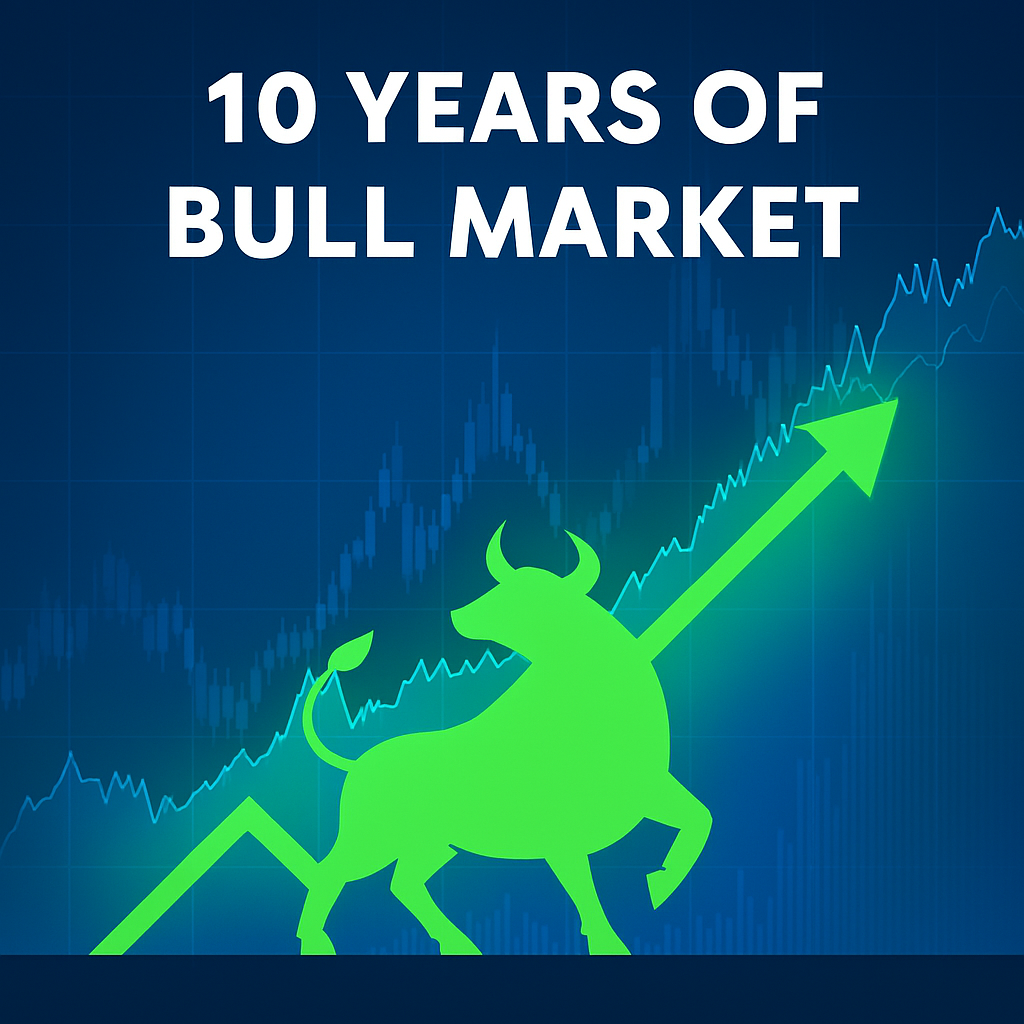
The Dawn of a Decade-Long Bull Market: Why the Next 10 Years Could Define a Generation of Investors
After years of volatility, inflation scares, and geopolitical uncertainty, the global economy may be entering a new, sustained era of growth — one that could fuel the longest bull market of the 21st century. While no one can predict markets with absolute certainty, the macro indicators, technological trends, and demographic shifts all point toward a powerful upward cycle over the next decade.
1. The Global Reset and Structural Rebound
The 2020s began with unprecedented disruptions — a pandemic, energy shocks, and rapid tightening from central banks. But beneath the surface, economies are resetting. Inflation has cooled in most developed countries, supply chains are restructured, and productivity is recovering. As interest rates begin to normalize, capital will likely flow back into equities, property, and innovation at historic levels.
2. The Technology Supercycle
Artificial intelligence, automation, quantum computing, and biotech are not just buzzwords — they represent an economic inflection point. The last bull market (2010–2020) was driven by smartphones and cloud computing. The next one could be powered by AI integration across every sector, from energy to healthcare, unlocking trillions in productivity and new business models.
AI’s penetration is still below 10% in most industries — meaning the curve is only beginning. Investors who position early in this transformation may benefit from a decade of compounding growth similar to what early adopters of the internet experienced.
3. Demographics and Wealth Transfer
Over $80 trillion in wealth is expected to transfer from baby boomers to millennials and Gen Z by 2035. These generations are more digitally native, sustainability-focused, and open to alternative investments such as crypto, private equity, and green tech. This shift will reshape financial markets — driving capital toward innovation and companies that align with long-term global challenges.
4. The Rise of Emerging Markets
Developing economies — particularly in Asia, Africa, and Latin America — are projected to account for over 70% of global GDP growth through 2035. Digital infrastructure, improved governance, and demographic expansion are setting the stage for decades of compounding growth. For global investors, diversification into these markets may become not just optional but essential.
5. The New Energy Paradigm
The clean energy revolution is not slowing down. Falling costs in solar, wind, and storage are accelerating the transition away from fossil fuels. With global investment in renewables already surpassing $2 trillion annually, the next decade could see energy independence, innovation in green finance, and major infrastructure projects driving new cycles of prosperity.
6. The Long Game for Investors
If history is any guide, the best time to invest is when pessimism fades but fear still lingers. The foundations of a new bull market are typically laid in uncertainty. For long-term investors, this period offers rare opportunities: high innovation, undervalued sectors, and the potential for exponential returns through disciplined compounding.
The coming decade may not be linear — there will be corrections, bubbles, and policy shifts. But the broader trajectory, driven by technological and structural transformation, looks unmistakably upward.
Final Thoughts
We may be standing at the edge of a 10-year bull market that redefines wealth, industries, and investment philosophy. Whether you’re a retail investor, institutional player, or entrepreneur, the next decade could reward those who act strategically and think long-term.
The opportunity is not just to participate — but to understand the forces shaping it. The next 10 years may not simply be another cycle; they may be the dawn of a new economic era.
Disclaimer: This article represents an opinion and does not constitute financial advice. Always conduct your own research or consult a licensed financial advisor before making investment decisions.